Showing posts with label antitrust. Show all posts

Saturday, January 3, 2015

Japanese Suppliers: May the New Year be Happier!

originally posted at The Truth About Cars, Jan 2, 2015

Go HERE for an index of my posts there

車輸送カルテル罰金、日本郵船71億円で合意

OK, you probably can’t decipher that. The news – this headline from Yomiuri – is the latest in the supplier antitrust cases that ring the world, from Japan and Korea through the US to Germany. Even China has gotten into the act, slapping fines on firms that charge “excessive” prices for OEM aftermarket parts, though that is a reflection of price discrimination (selling for what the market will bear) rather than collusion.

Fines to date now total $2.5 billion. Even in the auto industry, that’s serious money. Whether we see private antitrust suits (which in the US carry treble damages) is unclear. Will Toyota be willing to go after its suppliers, without whom it cannot produce cars? Will it tighten its purchasing operations, where likely the “ordinary” parts central to collusion have younger, less experienced purchasers?

Now at one time, 50 years ago, kickbacks were not unusual in the US industry, but the one account of the internals of the cartels – a Nov 16th scoop by Hans Greimel of Automotive News in Tokyo – carried no suggestions of suppliers getting buyers to turn a blind eye. Instead, it’s the intrigue of classic cartels in the US, meetings in obscure locations, rules for who is to bid in what manner to make their behavior less obvious to purchasers.

The excuse suppliers give is that they’re in a low-margin business. OK, but why should we care? Car companies need to pay enough that suppliers hang around for another model, but they’re in a low margin business, too — we customers have a plethora of mid-sized cars and small CUVs to choose among, and despite all the attention TTAC readers pay to hot vehicles, in the end price does matter. Furthermore, all of us who are in one way or another in the car business (and surely no one reading this blog does without, and without owners there is no car business) – anyway, all of us want the industry to focus on their core business, not on gaming the system. We don’t want management resting on its laurels, especially when they’ve won their prize by cheating.

Anyway, I’ve done my judge’s reports for my portion of the site visits for this year’s round of 35 PACE Award finalists. There are many suppliers out there that by the 5% of sales metric are high-tech firms; it would be bad for the industry if Japanese suppliers aren’t among them. However, the gut feeling I get from the last few year’s of closed-door, non-disclosure presentations by PACE finalists is that Japanese suppliers aren’t in the game the way they used to be. I don’t see the innovative firms I visit benchmarking themselves against Japanese suppliers, while I see bigger and bigger sales shares for these US- and Europe-headquartered firms coming from Japanese nameplates. [For a story that reflects this, see a Dec 9th article by Hans Greimel on Toyota’s revamping of R&D among its closely-held suppliers.]
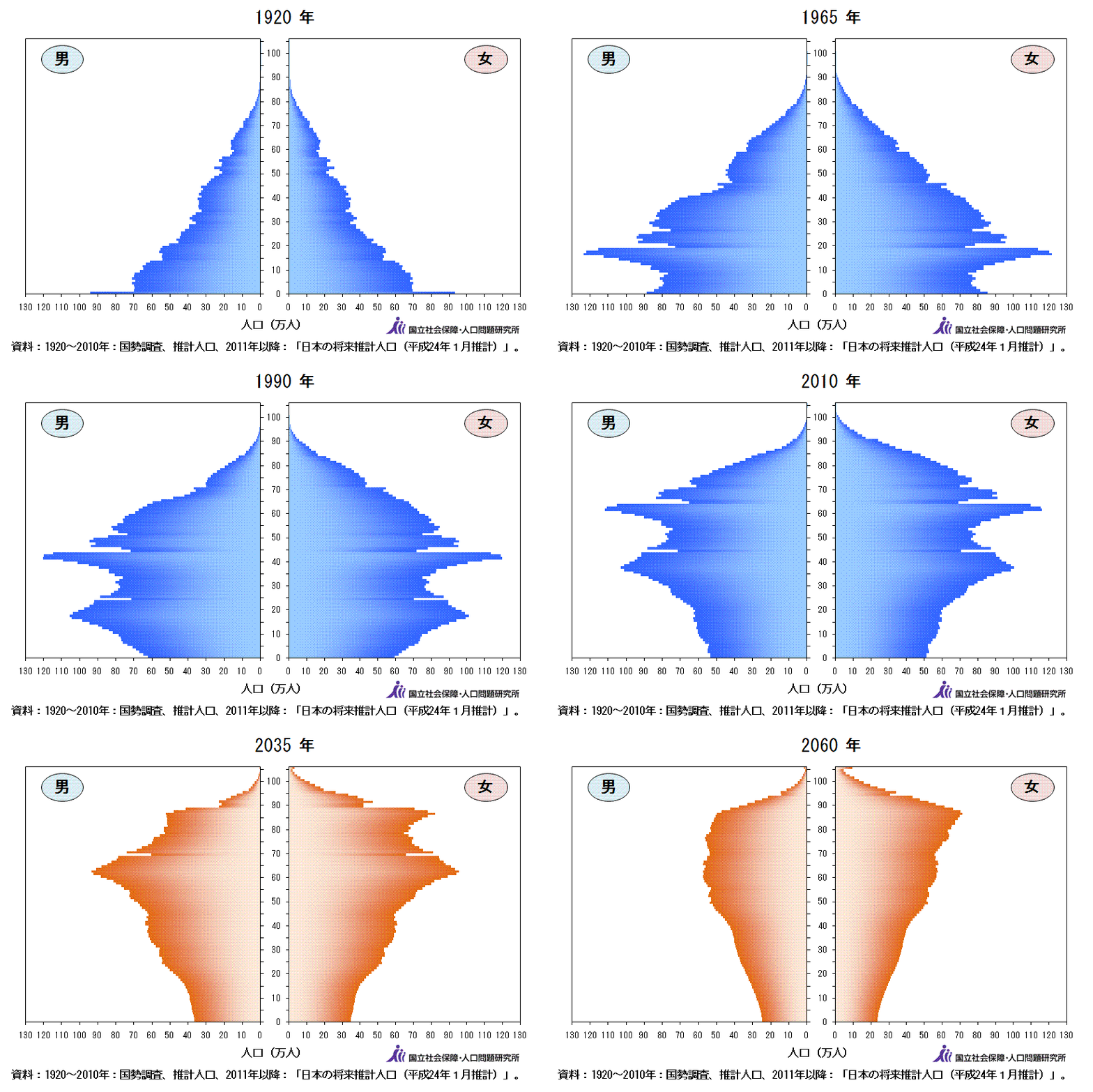
Demographics are at play – Japan's population is both aging and falling. While proportionally more Japanese graduate from college than ever before, 40-plus years of very low fertility means their absolute numbers are down; the number of Japanese who turned 20 in 2014 is half that of 1969 – so that (mortality aside) the number of 55-year-olds, at the experienced end of their engineering careers, is twice that of those potentially taking up the profession. With the number studying abroad in sharp decline, those graduates are even less likely to have experience living in English-speaking countries than in the past. The pool of potential engineers is smaller, and with a small number of exceptions these firms have only Japanese-speaking engineers in their home office. The flip side is that the US looks increasingly good as an engineering location, with more suppliers and car company engineering centers in a day’s drive from metro Detroit than ever before. In contrast, operations are scattered in Europe and China.

So while the news focuses on Takata and whether they will see a big drop in business over the next few vehicle development cycles, we really ought to look as well at the list of firms in the various cartels. Won’t their customers opt when they can for other suppliers? – most of the members of the busted cartels are Japanese companies. Yes, the yen is weak, creating a “buy Japan” incentive. However, no car company wants the risk of long logistics lines; JIT (just-in-time) manufacturing is the industry norm. There’s no guarantee, either, that the yen will stay at ¥120/US$, down from ¥100 in June and ¥80 2 years ago. So this is one more strike against the Japanese industry (in the sense of “Made in Japan”) and against the Japanese supplier industry (since they are more domestic than their US and European rivals).

I wish them a Happy New Year – 謹賀新年. At least for Japanese suppliers, 2014 wasn’t a very good one. I’m afraid, though, 2015 won’t be any better.

Oh, and that headline: ¥7.1 billion in fines on [the shipping company] NYK Line in a car transport cartel…

Mike Smitka

Thursday, September 26, 2013

$2 billion and counting: the supplier conspiracy

The conspiracy of Japanese wiring and electronics suppliers to put the screws to Toyota and other customers has now led to the largest antitrust action in history. What we know appears stupendous in scope. To date 20 suppliers have paid fines totaling $1.6 billion in the US (an additional $347 million in fines in Europe and Japan brings the total to $1.95 billion). Some 21 executives have pleaded guilty to felony antitrust charges including jail time and financial penalties. Wired participants, secret locations, coded communication and an expanding list of auto parts and firms, spanning 10 or more years and at least 4 continents. Wild!

...once customers have been screwed for a while, it starts to feel normal

Then there's what we don't know. To date all of those charged have pleaded guilty. As a result, the Department of Justice (and their counterparts in Japan, the EU, Canada, Mexico, Korea and Australia) have not had to enter detailed charges into the public record. With no trial, no evidence need be made public – and even though every corporate law firm in Detroit is racking up billable hours beyond their wildest imagination, those involved have done a truly impressive job of keeping their mouths shut.

And with cause: private lawsuits in the US can seek treble damages, and at least 45 such have been filed (and for now consolidated in the District Court in Detroit). The fines that firms have willingly paid suggest those fines are well below the maximum – though back of the envelope calculations suggests DOJ used a rule of thumb of 8% of revenue for the early wire harness settlements. These and other firms may however have benefitted from the antitrust Amnesty Plus program, which provides for low or even no fines for those who 'fess up' early and help the prosecution. So the amounts could easily hit $5 billion. However, without evidence, such suits will go nowhere, and Federal courts have put a stay on those while criminal investigations are ongoing. Attorney General Holder has indicated that the Department of Justice is far from concluding their work; for their part, the Europeans raided six companies this month. But then there are those wiretaps of phones and tapes of meetings: it appears that the DOJ is limiting itself to central players, and going at them with such ironclad cases that they can avoid wasting resources on the morass of a jury trial.

NPR segment …Nine Suppliers Plead Guilty… [mea culpa: they interviewed me]

In some ways, the industry invites conspiracy. The design and engineering process for a new vehicle involves so many components that doing a full start-from-scratch purchase for each part in a vehicle is administratively infeasible; purchasing departments just aren't large enough. So when a Toyota comes out with the next generation Camry or a Ford the next F-150, they will naturally lean towards the incumbent supplier – they know the engineers, they will have the manufacturing capacity. With suppliers involved in the actual design process, they have to be selected before specifications are firm. Yes, the car companies pursue outside bids to try to keep the process honest, and when there is an entirely new component it's a fully competitive bid. Likewise firms with new technology can get their foot in the door – and those are exactly the firms I see as a judge of the Automotive News PACE award competition.

With so many vehicles under development – in the US alone carmakers will launch 365 new vehicles between now and 2015 – it's clear that purchasing departments have fallen down on the job of tracking costs. But these are not the highly engineered items where at present one or two firms control the technology, such as turbos or common rail diesel systems. When I look at a list of the components named in the guilty pleas, they are for the most part not items where new technology is changing the game: starter motors, alternators, seat belts, wire harnesses. While new materials are coming, in the case of harnesses leading to thinner gauges and now even lighter-weight and cost aluminum wires, these products are mature. But this is necessary: you can't readily fix prices when a good isn't a commodity. When you know your and your competitors costs are similar, then you can agree on what the price could be and the level at which your conspiracy can fix it.

Part of the reason is again administrative: car companies with few exceptions have no internal manufacturing capability for the items they procure. They thus rely upon comparisons with past prices, adjusted for changes in the price of materials and known or anticipated productivity improvements. Therein lies the opportunity for a cartel: once suppliers have started screwing their customers, the car companies can come to believe that it's normal. Bids look sensible given past prices. Since harnesses with their miles of wire and hundreds of connectors are one of the most expensive component purchases a car company makes, companies always seek outside bids – but thanks to the conspiracy either find few firms express interest, or come in with ridiculous prices. [For an example see "Ford Alleges…" Automotive News, Aug 5, 2013] This should raise suspicions, but apparently did not set off alarms. While Toyota was firm mentioned in initial guilty pleas, the list of victims now includes most of the industry's major firms. Toyota's purchasing department may have been overwhelmed in its go-go years of the noughts (ending with the early retirement of the firm's top 4 executives), purchasing departments throughout the industry clearly were not up to the task of sniffing out carefully coordinated price fixing.

With wire harnesses, 4 suppliers dominate the Asian market, with Delphi Packard (yes, the name I use is anachronistic) a strong contender elsewhere (and as the one major player not named in this segment, finding that it's suddenly gaining market share in Nagoya). So how did the conspiracy arise? In Japan (as elsewhere) suppliers share panels in engineering conferences and industry associations; ironically, as I found in my own PhD research in the mid-1980s, they may even play golf together at events hosted by their customers. Put them together in the ex-pat supplier community in the US and informal interactions become more likely. Or at least that's my supposition of how things got started, and why it remained undetected in some cases for a full decade.

With stays on the private lawsuits, with uncontested guilty pleas in all the criminal cases, and with those involved so far keeping their lips sealed, few details have come out on the US end. It may be that journalists in Japan can find out more – what goes into the public record may be different, Japan's Freedom of Information Act is stronger than that in the US, and when plied with drinks officials and mid-level auto industry managers may be more willing to speak less-or-more off the record. Journalists and stock analysts should also be asking Toyota about their purchasing operation, about how they could be bamboozled out of so much money and how they're working to fix that. Finally, all should be lauding the Japanese Fair Trade Commission, which in its pursuit of this case is showing that it is more capable than in the past – handling the domestic side of a multinational price-fixing conspiracy – and is willing and able to act in the interest of consumers.

Mike Smitka

Justice Department Press Release